Milled since 1762
Three mills, one river, two hundred and sixty years.
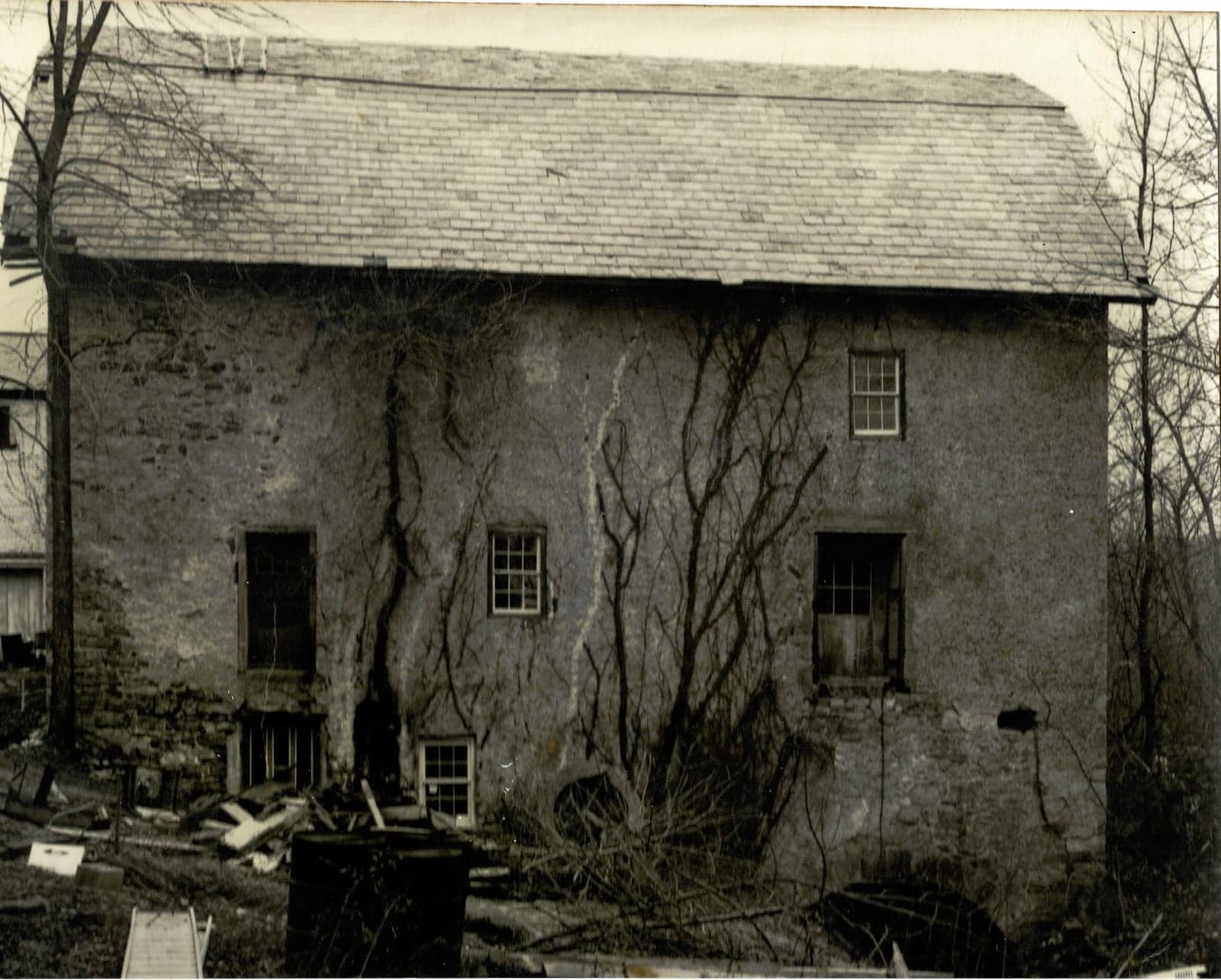
Grain has been ground on this bend of the Musconetcong since 1762, when George Beatty built the mill that gave Beattystown its name. Today’s four-story stone mill rose in the early 1800s on the same site. It is part of the National Register’s Beattystown Historic District and was reborn as a home in the 1970s.
4.91 · Guest favorite
1762
Beatty’s Mills
A grist mill, fifty acres, and a village that took the miller’s name.
In March 1762 George Beatty bought 50 acres beside the Musconetcong River and built a grist mill. The settlement that grew around it was called Beatty’s Mills.
Read more
It became Mansfield Township’s oldest village, and for a time a busier market than Hackettstown. Farmers from the valley brought their grain here to be ground and sold.
1778
A village on the march
The road past the mill is older than the Republic.
In the winter of 1778, the British and German soldiers captured at Saratoga were marched south along it. Stewart Martin, the village tavern keeper, fed some of them on the way.
Read more
In 1812, 300 men drafted for the new war gathered at Benjamin Leek’s public house before setting off down the freshly built turnpike.
The Bird brothers, distillers and storekeepers, tried to rename the village Birdsburg. The other settlers refused. Around 1800 Ziba Osmun built Mansfield’s first distillery here and made only pure apple jack.
early 1800s
Built in stone, third time lucky
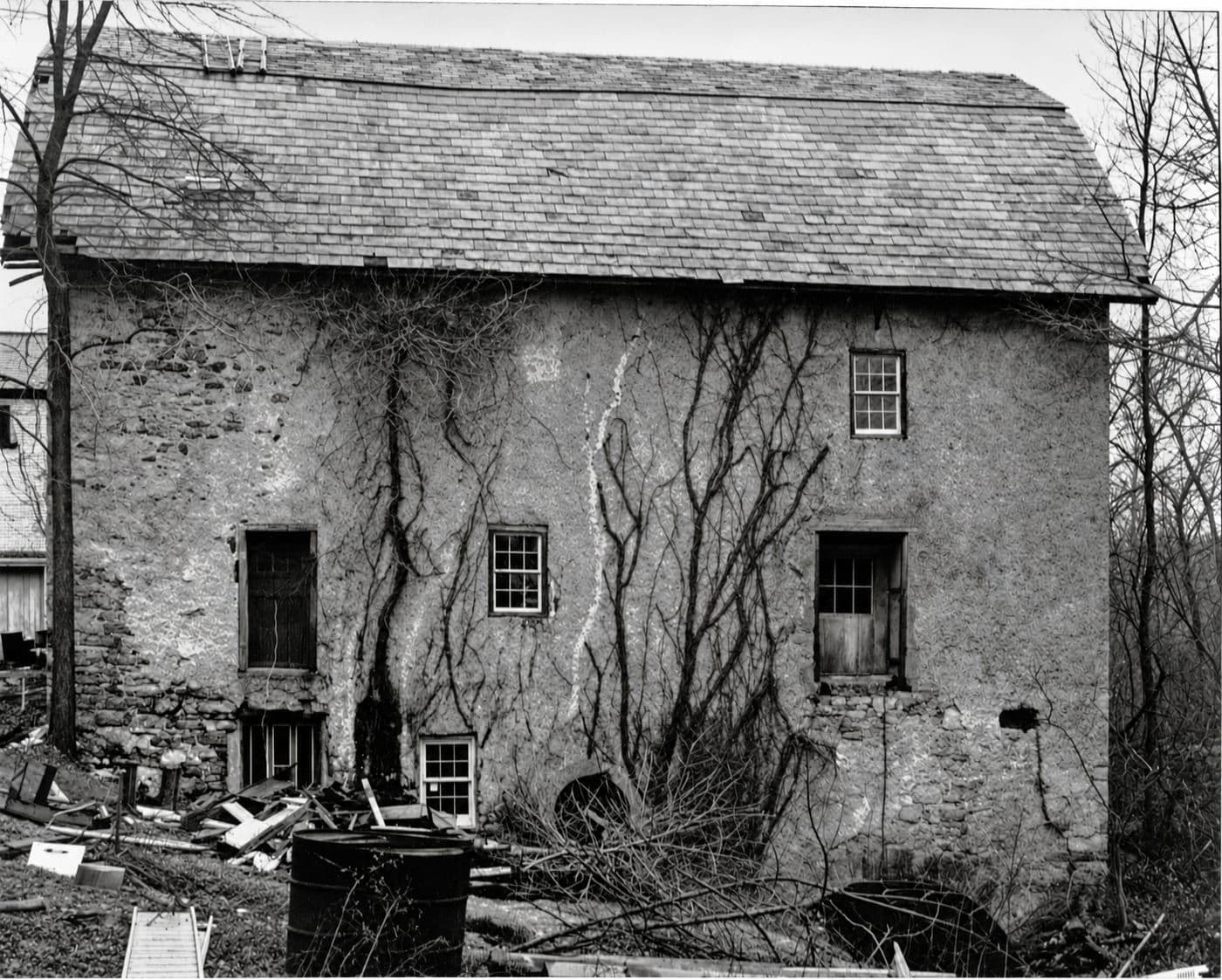
Two mills burned on this spot before the present one was raised.
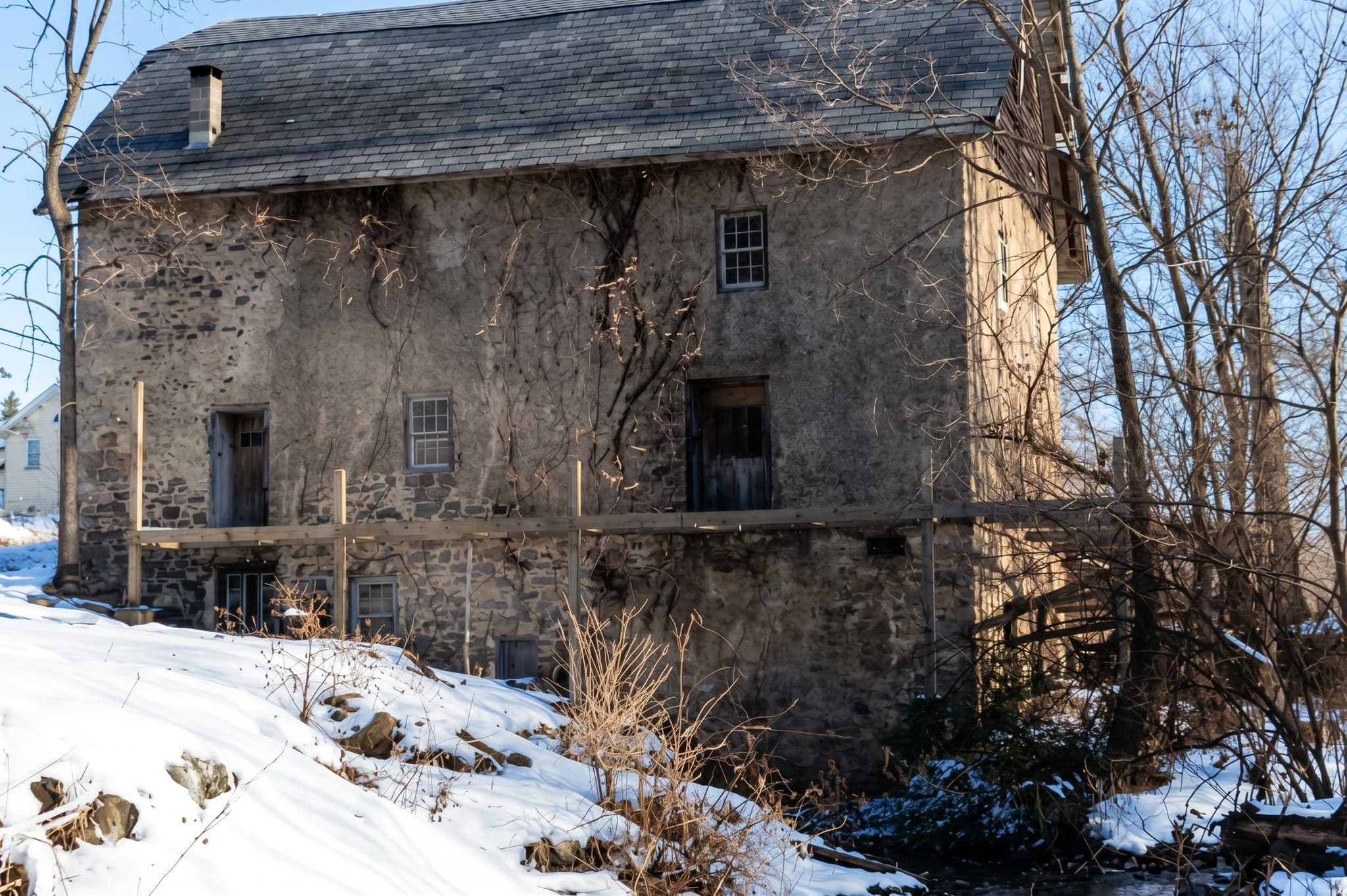
Its limestone and granite walls are more than two feet thick, and its frame is oak beams a foot square. A 24-foot water wheel, and later a turbine, drew power from a nine-foot drop in the river.
Read more
The wheel’s axle beam alone was about 40 feet long and weighed some 3,000 pounds. About a century after the mill was built, an addition enclosed the wheel. The turbine pit sits in the arched opening at the east end, and turbine and shafting remains survive.
19th century
The Fisher years
For much of the 19th century the mill belonged to one family.
James Fisher, a Virginia-born saddler, became the village’s first postmaster in 1835. His son John B. “Squire” Fisher ran the mill and store, opened local iron mines and burned lime by the river.
Read more
Later owners included Judge White and, by 1911, L. T. Labar, the area’s largest landowner, who held the mill “with its fine water power” along with a lime quarry and a woodworking plant.
“A huge building constructed of stone.”
1974–1982
A gift of space
A derelict warehouse, six years of work, and two men.
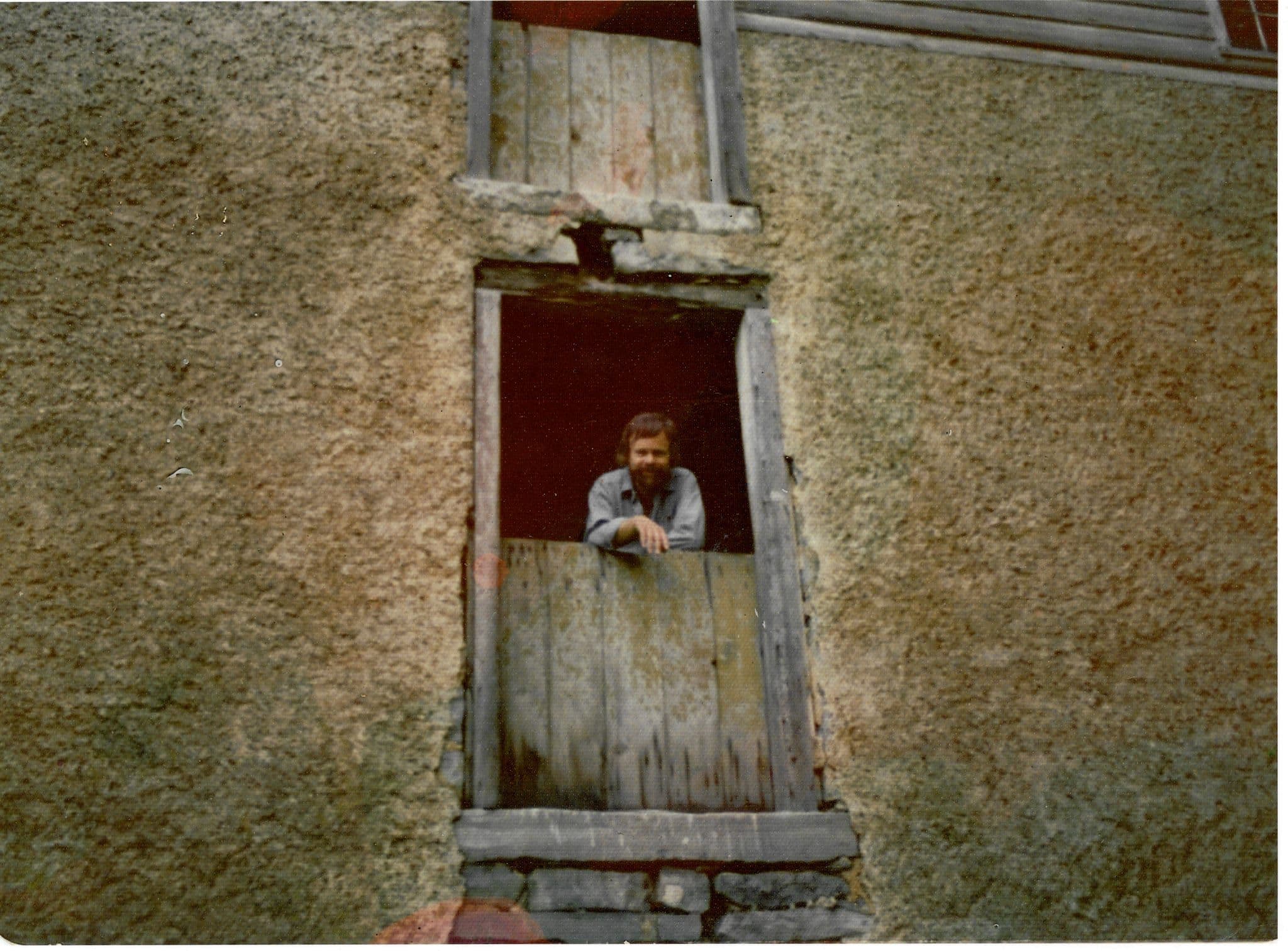
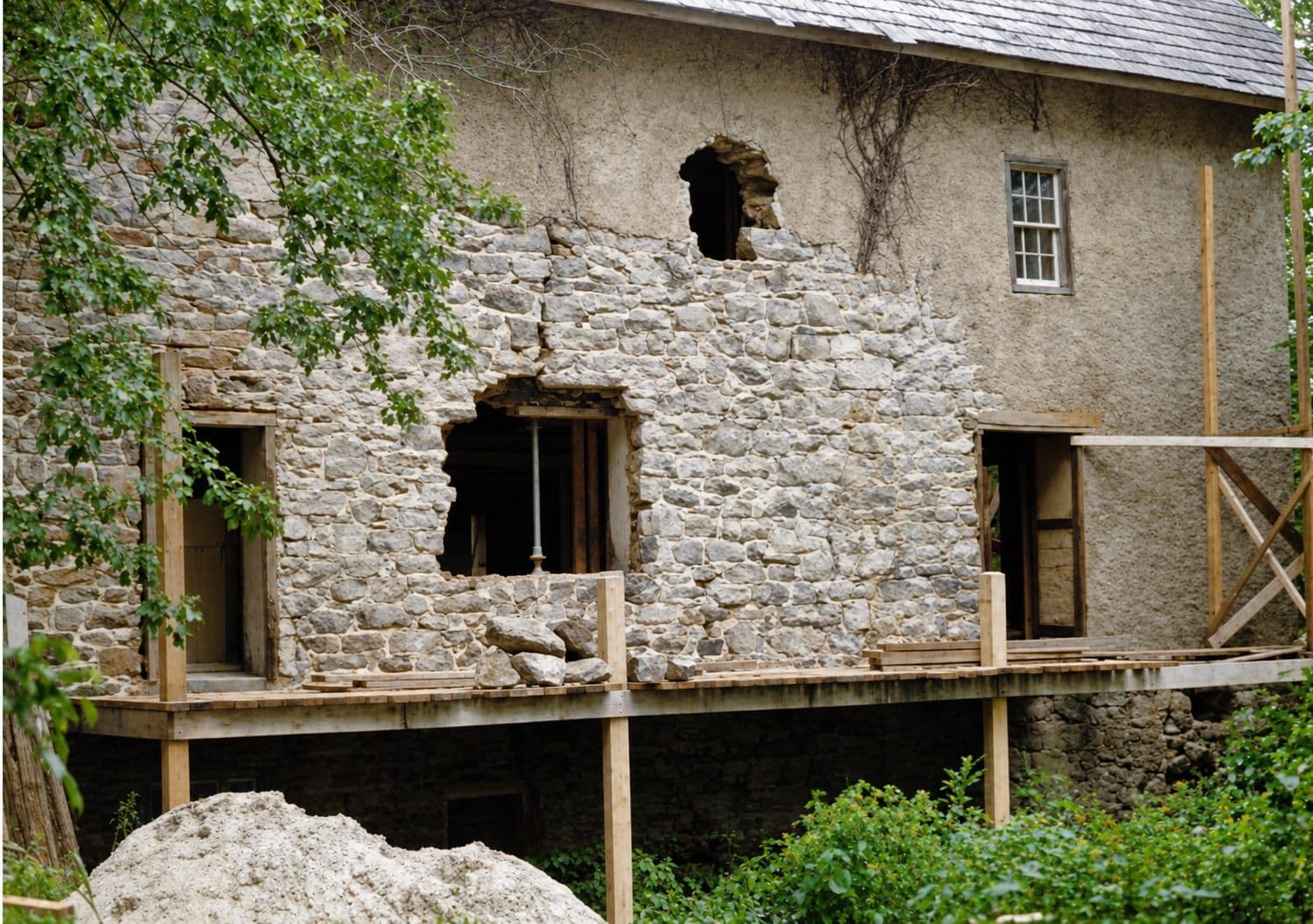
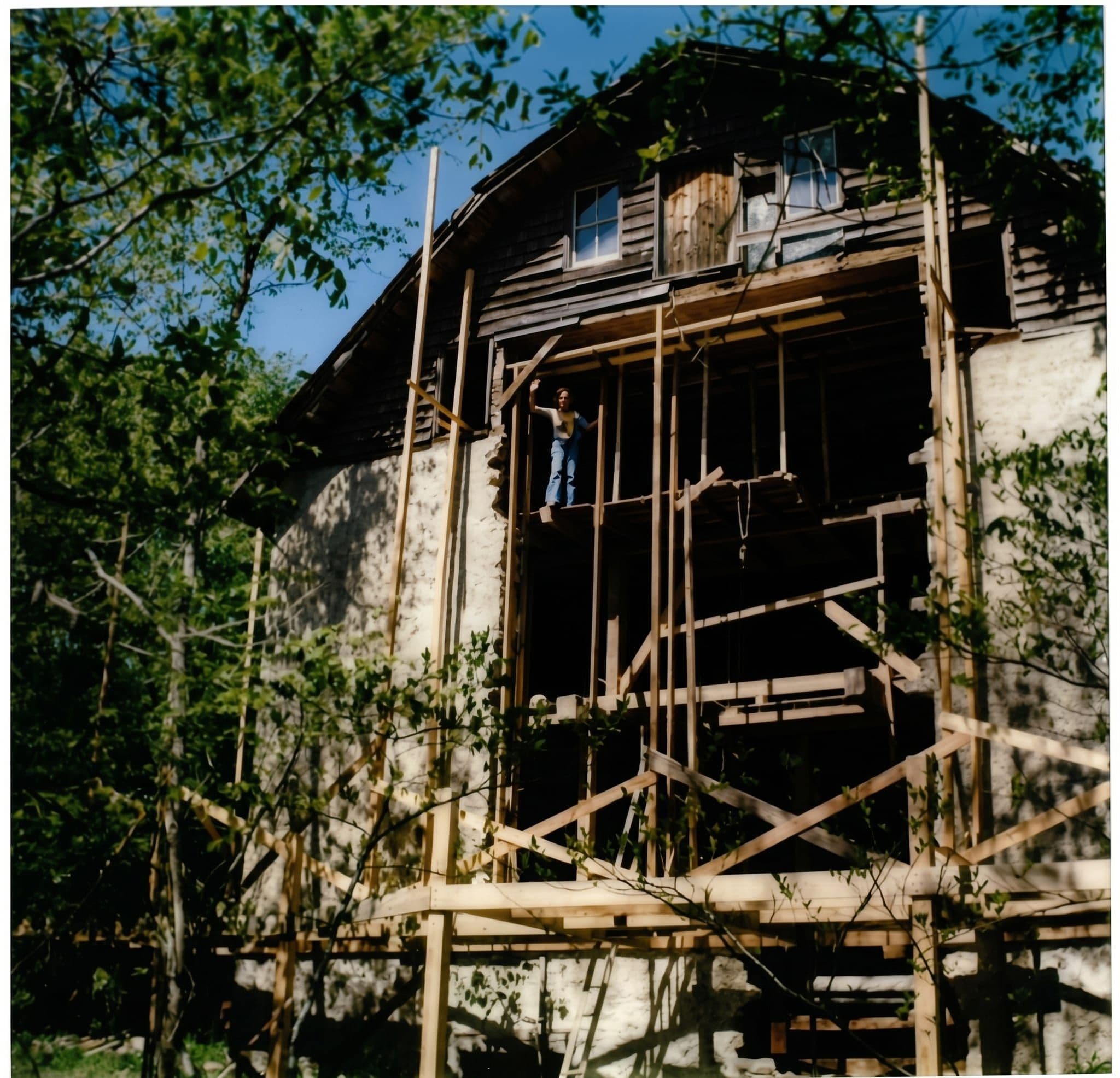
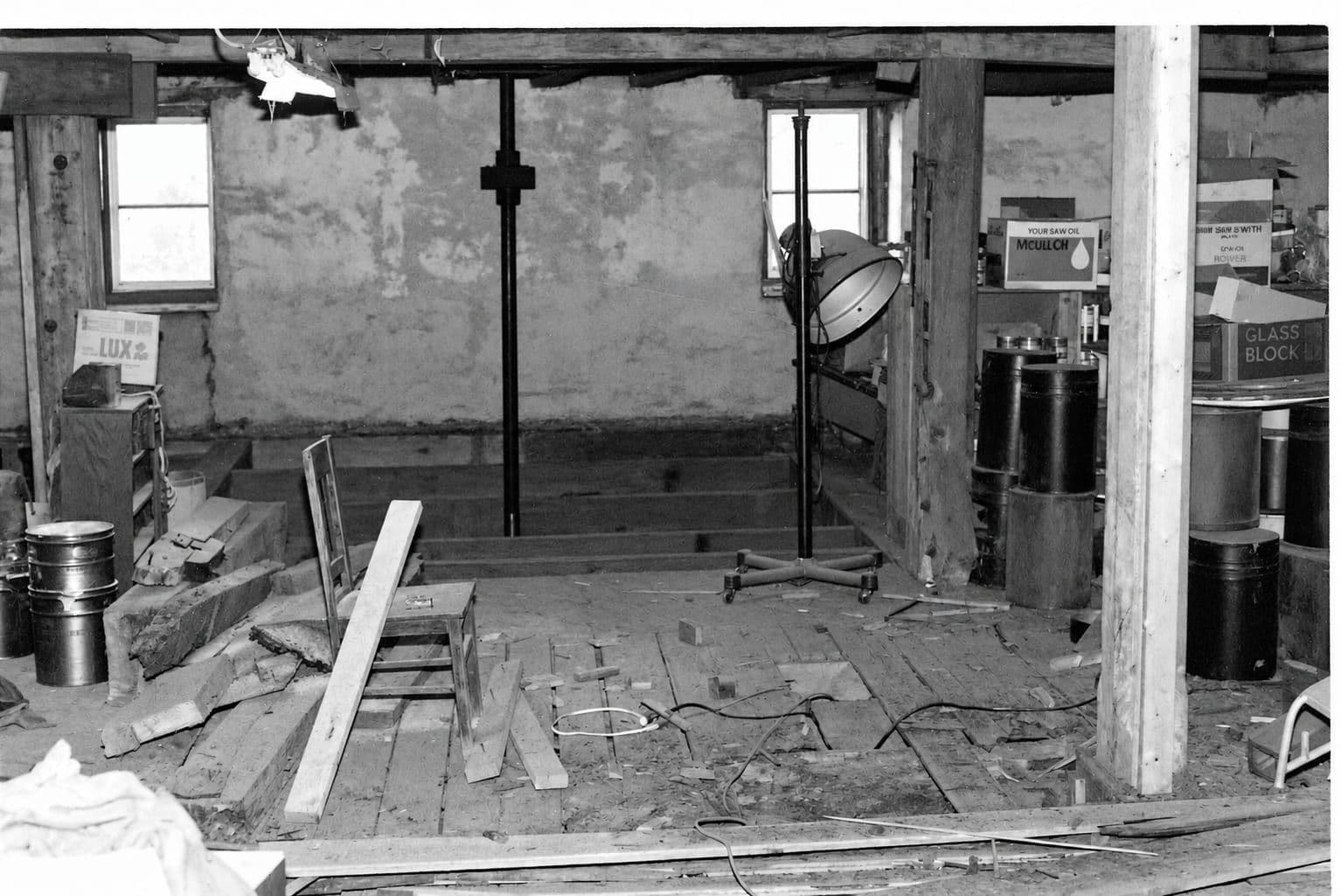
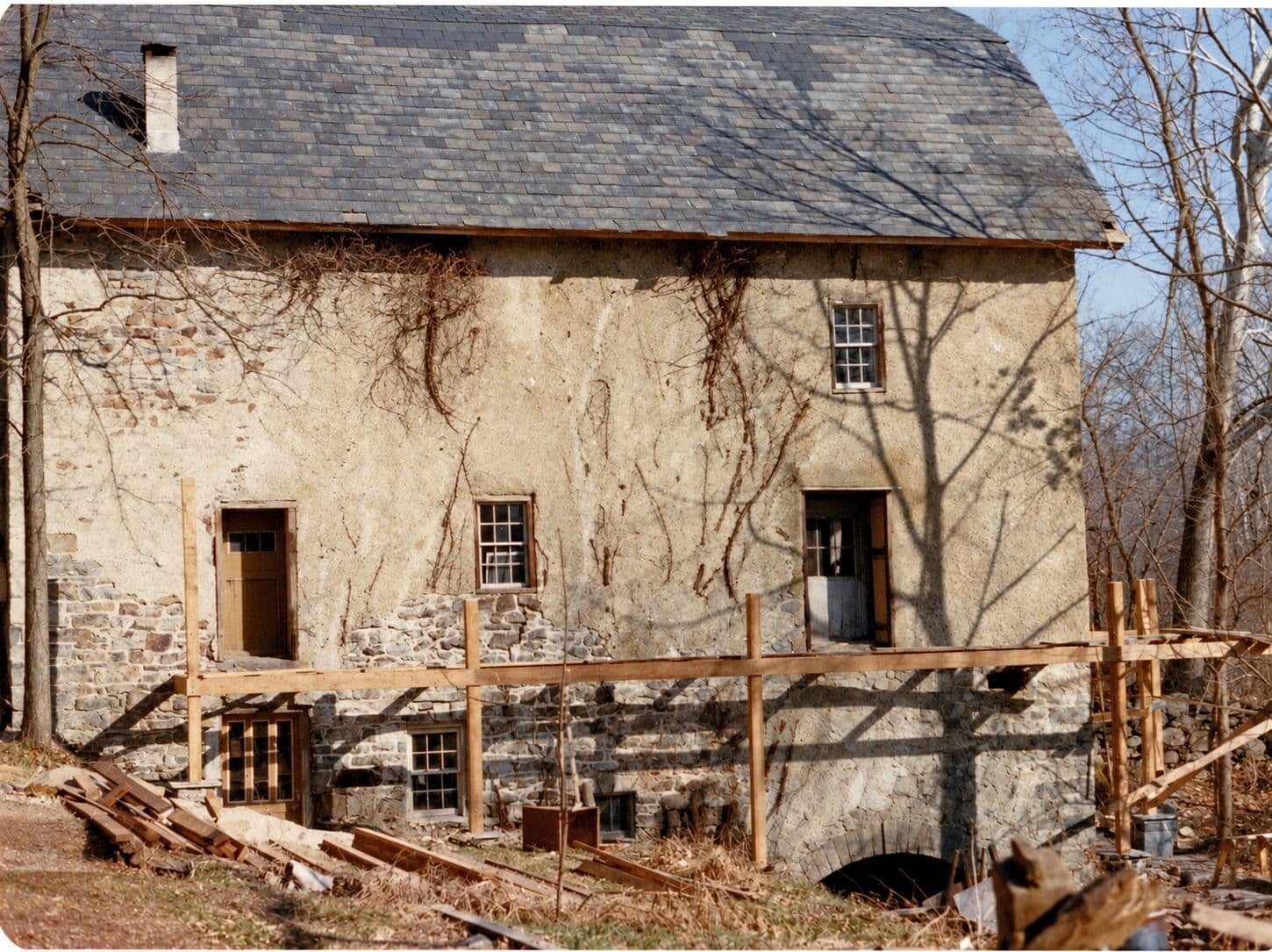
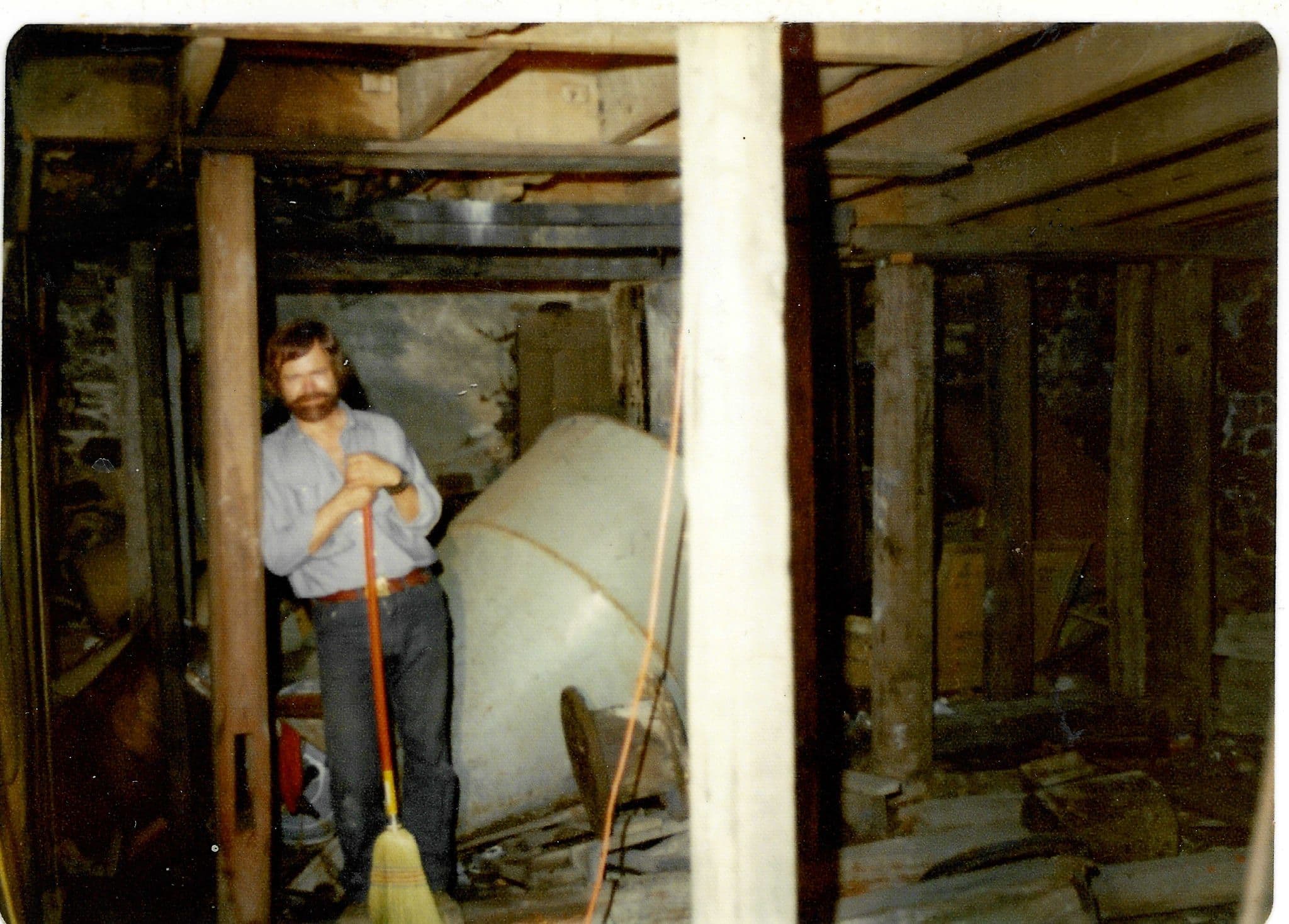
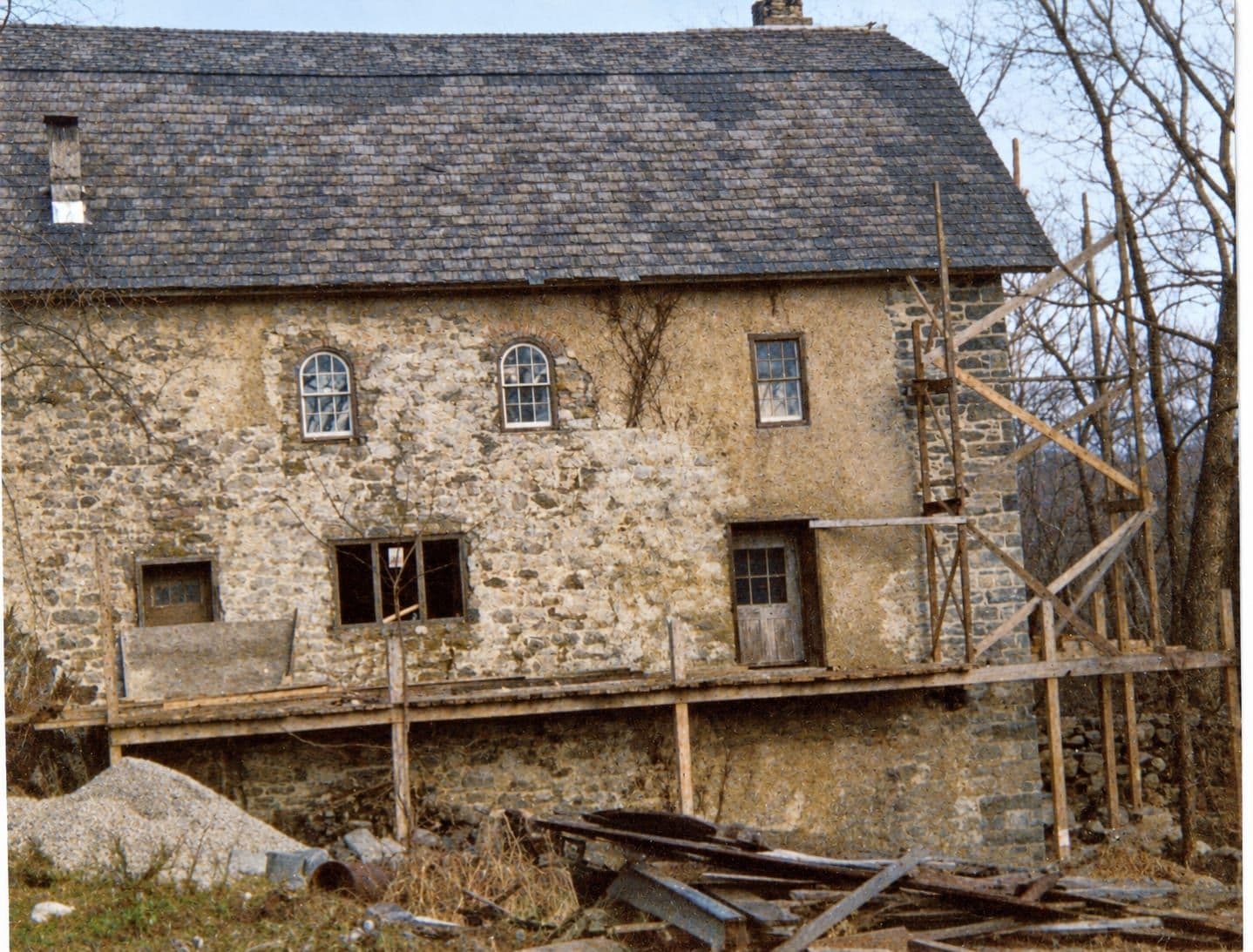
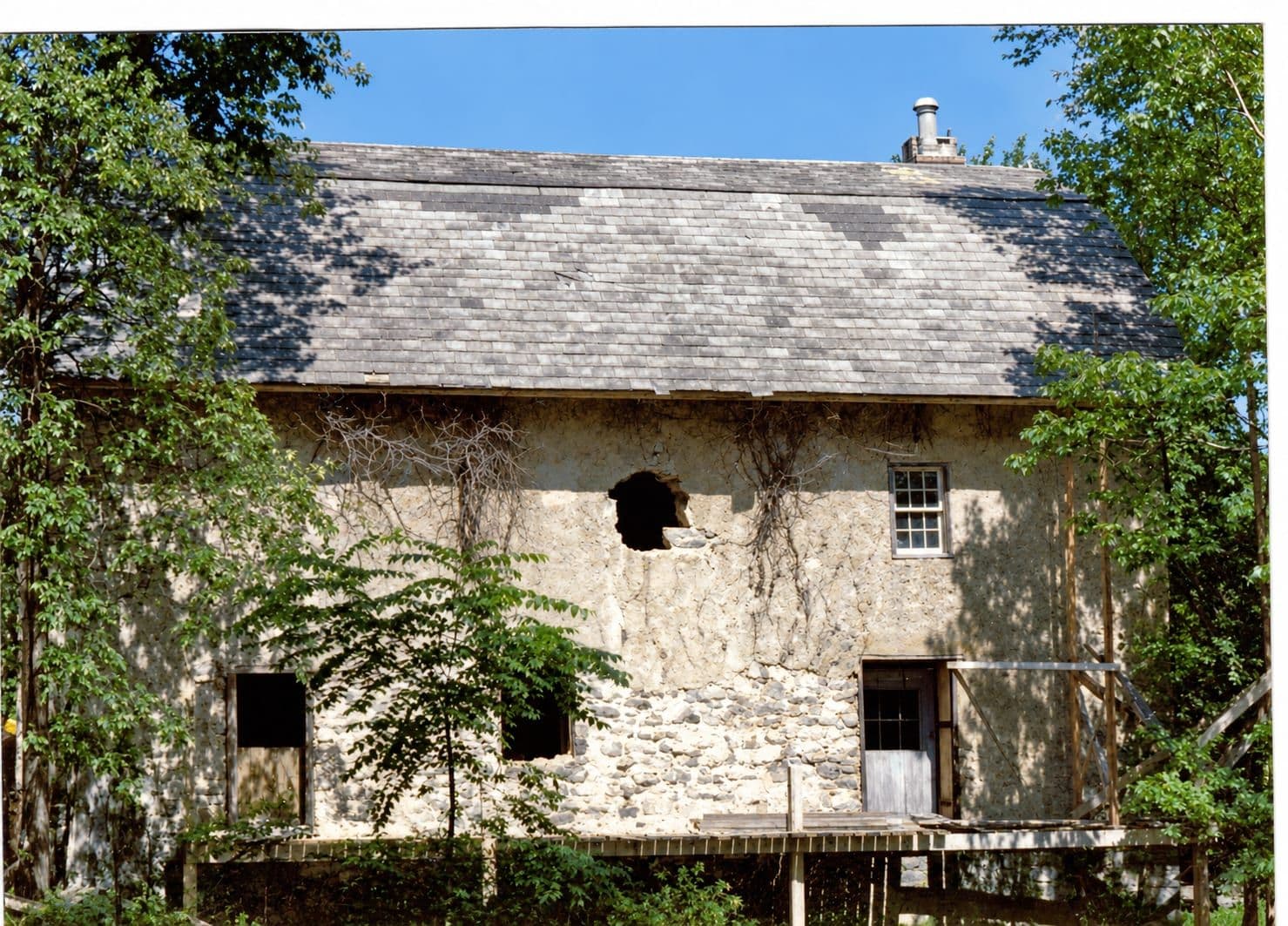
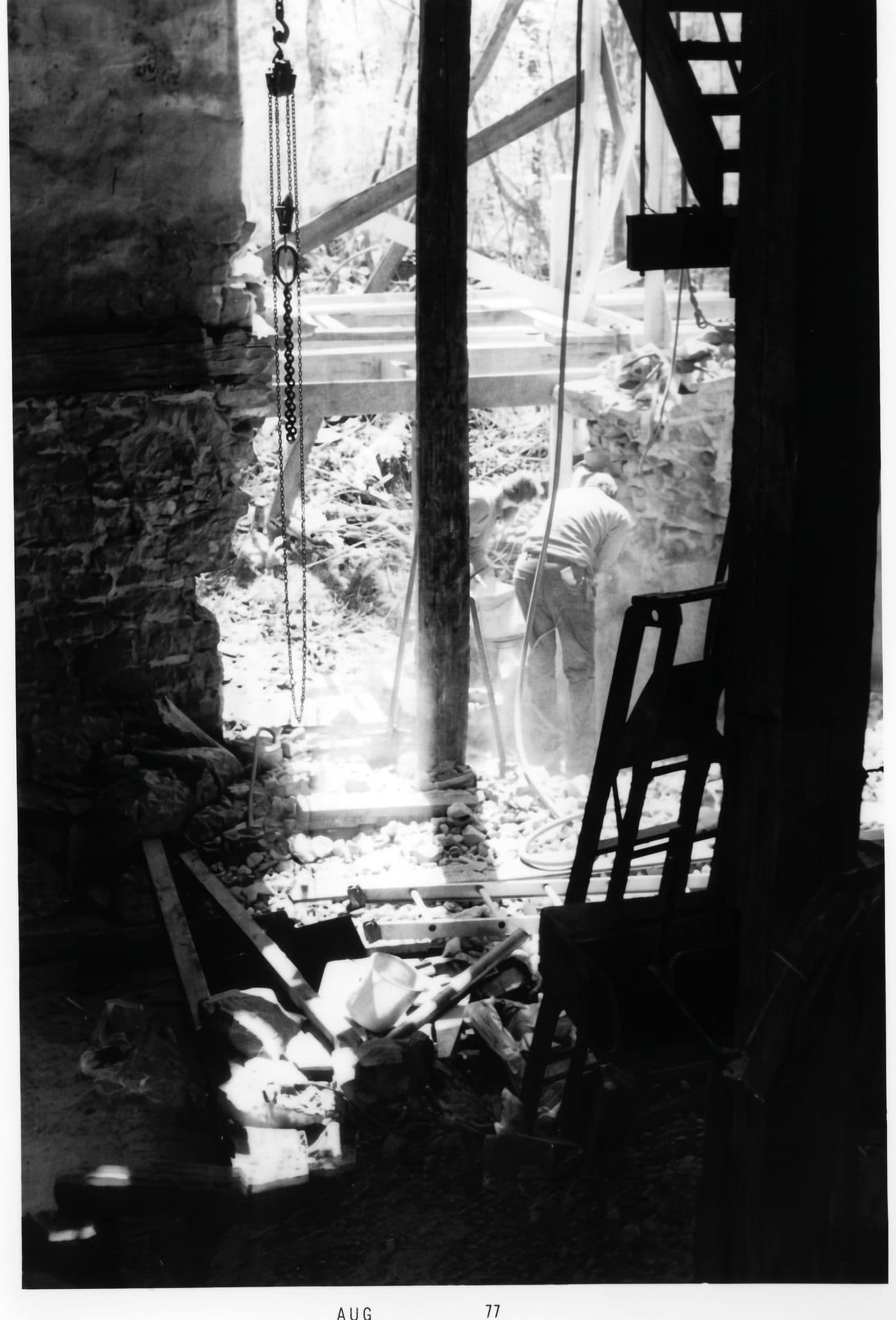
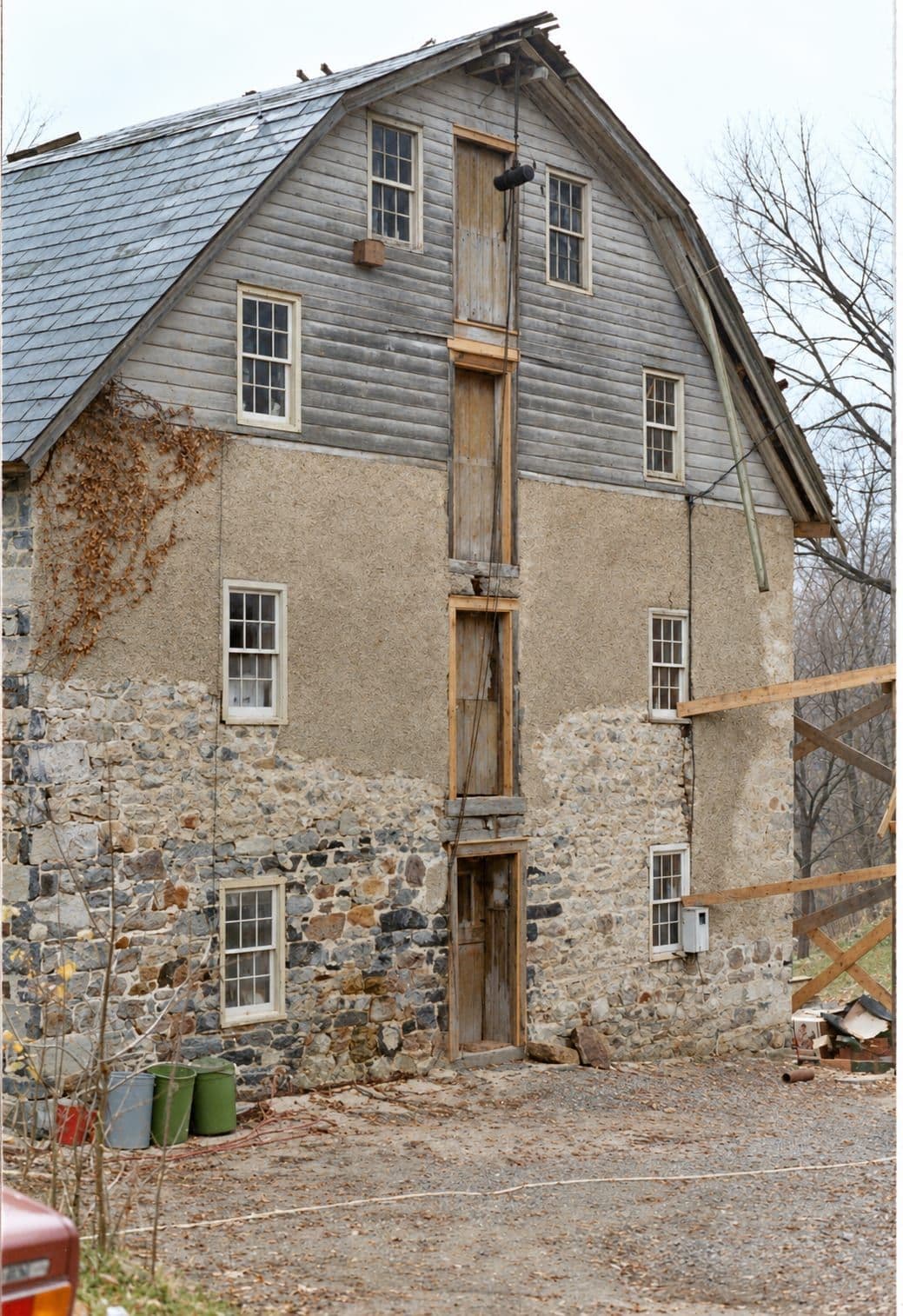
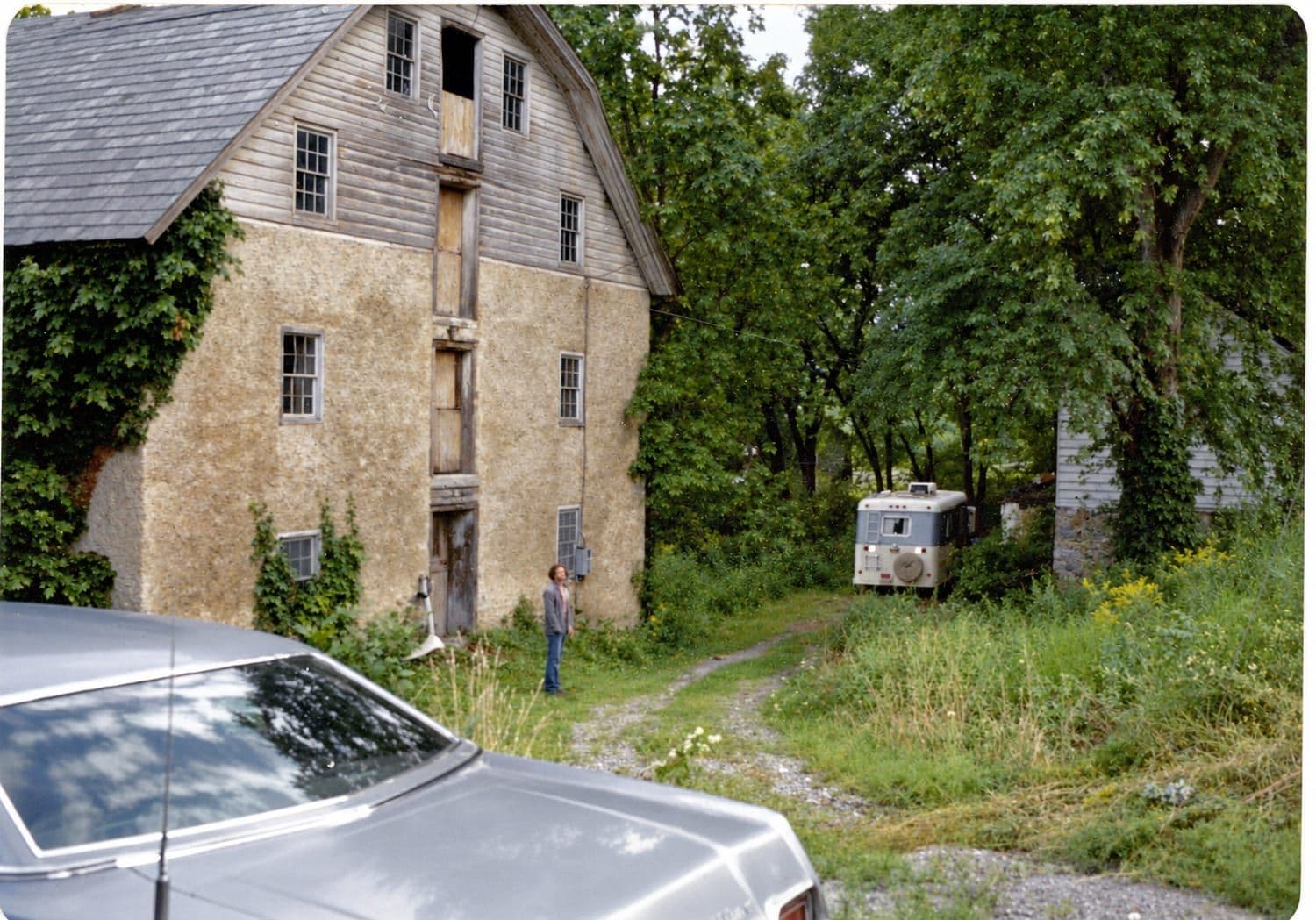
By the 1970s the machinery was long gone. The mill was a warehouse, its stone hidden under plaster, its roof open to the sky. In 1974 Charles Buckley, a Yale-educated architectural designer, bought it.
Read more
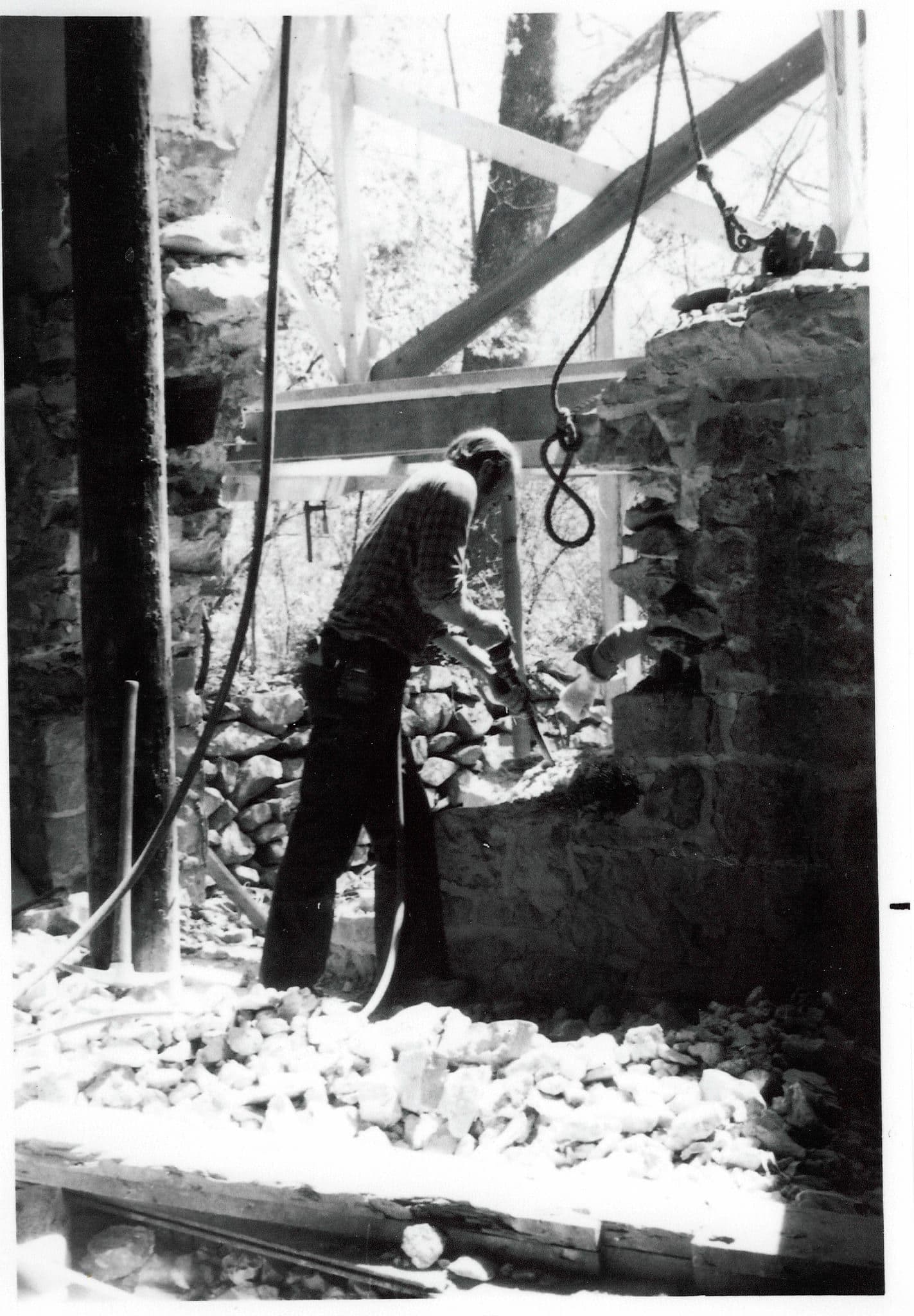
With craftsman Donald Cole he spent six years bringing it back. They stripped the walls to bare stone with jackhammers and sandblasters, hauled out 115 barrels of trash, and jacked one sagging section fourteen inches to level it.
They laid slate roof shingles by hand, hauled from Pennsylvania’s slate belt, and opened the west end with a wall of glass from the ground floor to the roof. They hung an oak staircase on steel rods that climbs five floors, and built the living-room fireplace from stones taken out of the west wall.
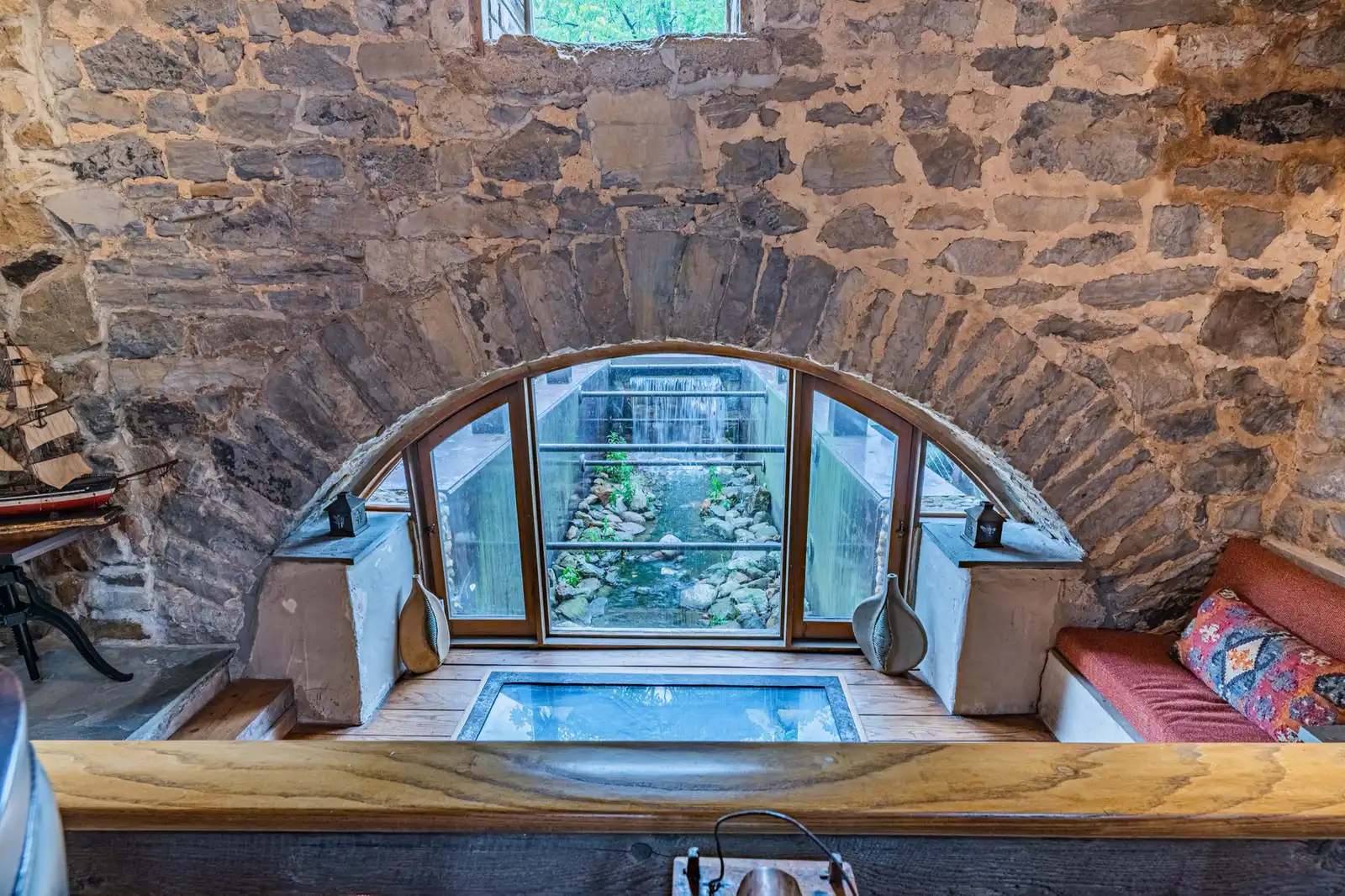
The original millrace still runs beneath the living room. You can watch it through a stone-arched window, and Buckley planned the glass floor panel that shows it.
“I saw the mill as a gift – a gift of space.”
1990
On the National Register
The work was judged, and it held up.
In 1990 the mill was listed on the National Register of Historic Places as part of the Beattystown Historic District.
Read more
The nomination noted that its renovation had “respected its historic character and surviving building fabric.” In 1996 Preservation New Jersey named Beattystown one of the state’s ten most endangered places.
Timeline
Every row is sourced. The site has been milled since 1762; the standing building is the third mill here.
- 1746Richard Peter and Peter Lynford buy the land from Thomas and Richard PennNRHP
- 1759Lynford sells 128 acres to William Roseborough; Roseborough sells 50 acres to Alexander RogersNRHP
- 10 Mar 1762Rogers sells the 50 acres to George Beatty, who builds the first grist mill. The village becomes “Beatty’s Mills”NRHP
- 1770sStewart Martin keeps the tavernSnell, 1881
- Dec 1778Burgoyne’s captured “Convention Army” marches from Saratoga through the Hackettstown area toward Virginia; Martin feeds some of the prisonersWashington, 1778
- c. 1800Elisha and Edward Bird run a store and distillery; Ziba Osmun builds Mansfield’s first distillery, making applejackSnell, 1881
- 1800–1820Present stone mill built, after two earlier mills on the site burnedNRHP
- 1809James Fisher arrives from Staunton, Virginia; marries Hannah BirdSnell, 1881
Today
Your chapter
Two hundred and sixty years of grain, fire, iron, neglect and six years of someone’s obsession, and the water has never stopped.
You can stand on the glass panel and watch it go by.
Sources
- 1National Register of Historic Places nomination, Beattystown Historic District, ref. 90001449 (Thomas E. Jones, 1989; listed 1990)
- 2James P. Snell, History of Sussex and Warren Counties, New Jersey (1881), Mansfield chapter and Fisher biographies
- 3George W. Cummins, History of Warren County (1911), Mansfield chapter
- 4Richard E. Harpster, "Home of the Week", Daily Record (Morristown), YOU section, 26 Dec 1982; photographs by Stuart Davis. With the author's 3 Dec 1982 typescript.
- 5Thomas Gordon, Gazetteer of the State of New Jersey (1834)
- 6George Washington to Col. Theodorick Bland, 23 Nov 1778
- 7Preservation New Jersey, 10 Most Endangered Historic Places, 1996
- 8Warren County Clerk deed index; NJParcels Block 1703 Lot 3.01; Redfin sale history